Mastering Barrel to Liter: Industry Standards & Everyday Uses
Volume measurements are the unsung heroes of global commerce, science, and even our daily lives. From the vast oceans of crude oil traded on international markets to the precise quantities of ingredients in a chef's recipe, understanding how different units relate to each other is crucial. Among the most common yet often misunderstood conversions is Barrel To Liter. This article will demystify this essential conversion, exploring its historical roots, industry-specific applications, and the practical relevance it holds in our metric-dominated world.Understanding the Barrel: A Unit of Many Measures
The barrel, despite its seemingly straightforward name, is a unit of volume with a fascinating and somewhat convoluted history. Originating from physical containers used for shipping goods, its precise measurement has varied significantly across different commodities and regions over time. Today, when discussing Barrel To Liter conversions, it’s imperative to identify which type of barrel is in question, as there isn't a single universal standard for all "barrels." The most globally recognized and economically significant barrel is the US Standard Oil Barrel, often abbreviated as 'bbl'. This unit was standardized at 42 US gallons. Its establishment in the late 19th century was driven by the burgeoning American oil industry, aiming for consistency in trade. When converted to the metric system, one US Standard Oil Barrel equals approximately 158.9873 liters, or more precisely, 158.987294928 liters. This is the figure you'll encounter in international oil trading, energy reports, and economic analyses. However, the oil barrel is not the only barrel. Other traditional US barrel measurements include:- US Wine Barrel: Typically defined as 31.5 US gallons, which converts to approximately 119.2404712 liters. This unit is historically significant in viticulture and related industries.
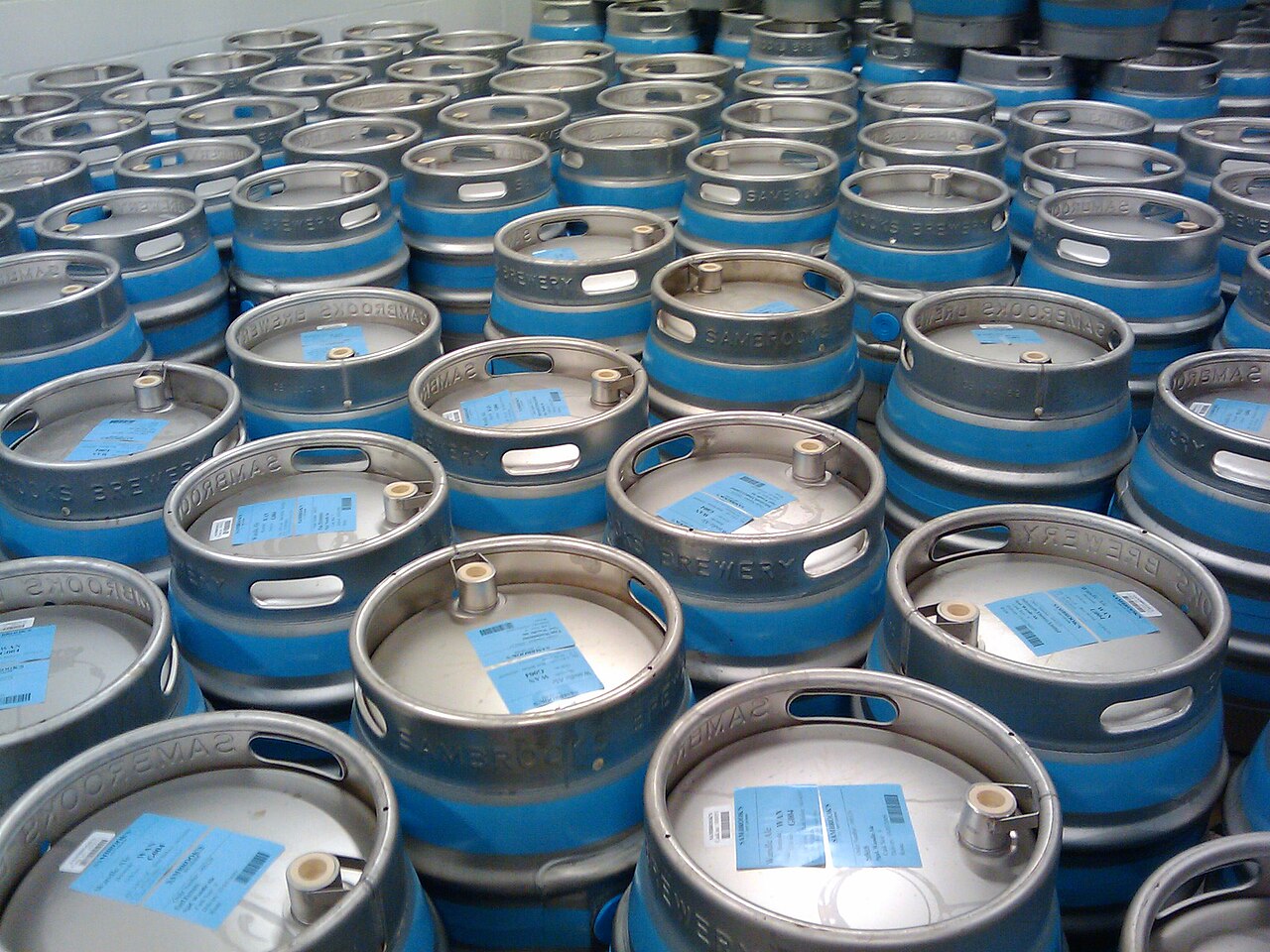
- US Beer Barrel: Often understood as 31 US gallons (a common size for a half-barrel keg), which would be roughly 117.347765 liters. While one reference context mentions 26 gallons, the 31-gallon measure is widely adopted in modern US brewing practices for standard commercial barrels.
- There are also "dry barrels" for agricultural products, which have yet another distinct volume.
The Liter: The Universal Metric Standard
In stark contrast to the historical and often context-dependent barrel, the liter (L) stands as a beacon of standardization in volume measurement. As a fundamental unit within the metric system, the liter is designed for clarity and ease of use, making it the preferred unit for liquids and non-solid foods across most of the world. A liter is precisely defined as:- Equal to one cubic decimeter (1 dm³).
- Equivalent to 1,000 cubic centimeters (1,000 cm³).
- One thousandth of a cubic meter (1/1,000 m³).
Demystifying the Barrel To Liter Conversion
Performing the Barrel To Liter conversion is straightforward once the specific barrel type is identified. The key is to apply the correct conversion factor. Below, we focus on the most common scenarios: the US Standard Oil Barrel and the US Wine Barrel.Converting US Standard Oil Barrels to Liters
This is arguably the most important conversion for global markets. The conversion factor is: 1 US Standard Oil Barrel (bbl) = 158.987294928 Liters. To convert any number of oil barrels to liters, use the formula:Liters = Number of Oil Barrels × 158.987294928
Example: Convert 15 barrels of crude oil to liters. 15 bbl × 158.987294928 L/bbl = 2384.80942392 LitersConverting US Wine Barrels (or general US liquid barrels) to Liters
For contexts where a general US liquid barrel, such as a wine barrel, is referenced (31.5 US gallons): The conversion factor is: 1 US Barrel (wine) = 119.2404712 Liters. To convert:Liters = Number of US Barrels (wine) × 119.2404712
Example: Convert 10 US wine barrels to liters. 10 bbl (wine) × 119.2404712 L/bbl = 1192.404712 LitersConverting Liters back to Barrels
- For US Standard Oil Barrels: 1 Liter = 0.00628981 Oil Barrel (approx)
- For US Wine Barrels: 1 Liter = 0.0083864143602948 US Barrel (wine)
Practical Applications and Industry Relevance
Mastering the Barrel To Liter conversion extends far beyond mere academic interest; it has profound implications across various sectors:- Oil and Gas Industry: This is where the conversion shines brightest. Crude oil is predominantly traded in barrels on global commodity markets. However, many countries consume and retail petroleum products in liters. Understanding how barrel prices translate to per-liter costs at the pump requires this conversion. Accurate measurement ensures fair trade, informed policy-making, and precise inventory management on a global scale.
- Brewing and Distilling: Craft breweries and distilleries, even those in the US, often need to scale recipes or report production volumes to international markets, necessitating Barrel To Liter conversions, especially for beer and spirits.
- Wine Industry: From bulk storage to international shipping, wine producers and distributors frequently deal with barrels that must be converted to liters for sales, labeling, and import/export regulations in metric-system countries.
- Shipping and Logistics: Calculating cargo space, weight, and volume for international transport often involves converting between barrel measurements and metric units to comply with global standards and optimize logistics.
- Scientific Research: In laboratories and research facilities worldwide, precise volume measurements are critical. Data expressed in barrels for historical context or specific industries must often be converted to liters for analysis, comparison, and publication in universally understood metric terms.
- Everyday Consumer Understanding: For the average person, grasping this conversion helps in understanding global fuel prices, appreciating the scale of oil reserves, or simply navigating recipes from different regions.
Tips for Accurate Barrel To Liter Conversions
To ensure precision and avoid common pitfalls when converting Barrel To Liter, keep these tips in mind:- Always Identify the Barrel Type: This is the golden rule. Never assume "a barrel" refers to the oil barrel unless explicitly stated. Clarify whether it's a US Standard Oil Barrel, a US Wine Barrel, or another specific type.
- Use Precise Conversion Factors: For critical applications like financial trading or scientific work, use the full decimal value of the conversion factor (e.g., 158.987294928 L for oil barrels) rather than rounded approximations like "159 liters."
- Leverage Online Converters Wisely: Online tools are convenient, but always double-check which barrel definition they are using. Good converters will specify "US Oil Barrel," "US Wine Barrel," etc.
- Understand Context: In a news report about oil prices, it's almost certainly referring to the 42-gallon oil barrel. In a historical document about fermentation, it might be a wine or beer barrel.
- Practice Makes Perfect: Work through various examples to become comfortable with the different conversion factors and their applications.
- Consider Significant Figures: When rounding, ensure you retain an appropriate number of significant figures based on the precision of your initial measurement.